
This year, our theme is “Walk A Mile In My Shoes.” The idea that you can’t understand someone (and shouldn’t judge them) until you’ve walked a mile in their shoes is a pretty common sentiment. And research has shown that reading fiction is one way to really get such a walk going. So, that’s what we are going to do this year: use fiction (and some nonfiction when we just can’t resist) to take walks in someone’s shoes. We hope you lace up those sneakers and join our journey. For May, our theme is mental illness, and we’re profiling books that feature characters who are affected by mental illness or books that address the topic in some way. Thanks so much to Jen for helping me research this post!
Sylvia Plath’s The Bell Jar remains a classic novel 60 years after it was published and for justifiable reason. Beyond the haunting parallels between the protagonist, Esther, and the author, the story is a harrowing one in its own right as it chronicles the mental health struggles of a college student.

For more recent fiction, consider Ruth Ozeki’s The Book of Form and Emptiness. It chronicles the experiences of a teenager named Benny and his mother. They’re both grieving the sudden loss of his father. Benny’s mother turns to hoarding while Benny himself begins to hear voices from inanimate objects. He ends up finding solace in the local library, where he finds his own book whose voice he hears.

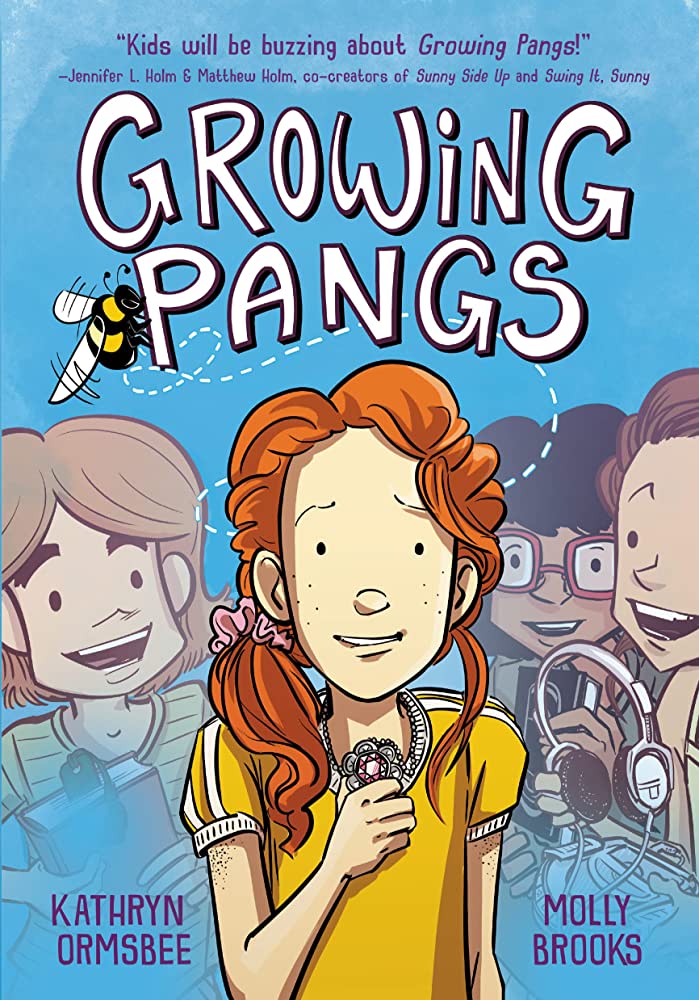
If you’re looking for a book geared toward younger readers, Kathryn Ormsbee’s Growing Pangs is a thoughtful exploration of its protagonist’s OCD and based on the author’s own personal experiences. Eleven-year-old Katie is devastated when her best friend becomes more distant during summer camp. Between that and sixth grade looming over her head, she starts to worry. She knows tapping three times won’t really help, but it makes her feel better all the same.
If you prefer nonfiction, you might try either Neil Wooten’s With the Devil’s Help or Robert Kolker’s Hidden Valley Road. They both profile the impact of mental illness on two very different families. Wooten’s book is a memoir that chronicles his family’s life in Appalachian Alabama, particularly his grandfather and father, men who are as charming as they are volatile. Wooten grows up in abject poverty, largely shunned by the community due to his family’s violent legacy. It’s only in retrospect that Wooten realizes they’re dealing with un-diagnosed mental illnesses.

Hidden Valley Road profiles the Galvin family. This family of twelve children spans the Baby Boomer years–the oldest was born at the tail end of WWII while the youngest was born in 1965–came to the attention of researchers in the 80s when it was revealed that six of the family’s ten sons were schizophrenic. Kolker juxtaposes the Galvin family’s story with a history of the disease, as well as a look at the groundbreaking research drawn from the family’s DNA that could help pave the way toward more effective treatment.

What’s your favorite book that addresses mental illness? What have you read lately that helped you walk in someone else’s shoes? Tell us in the comments! As always, please follow this link to our online library catalog for more information on any of these items or to place them on hold.

 Berryville Book Buzz
One thought on “Walk a Mile in My Shoes: May”