
We have a lot of fantastic digital resources, many of them courtesy of the Arkansas State Library. Because we’re a library in Arkansas, we have access to their Traveler Database. For this entire year, every month, we’re going to look at the different features available on these databases. For this month, we’re going to focus on the health and medical resources.
To get to the health resources, follow the directions in the first post of this series.
Once in the Arkansas Traveler database, click on Health & Medicine.
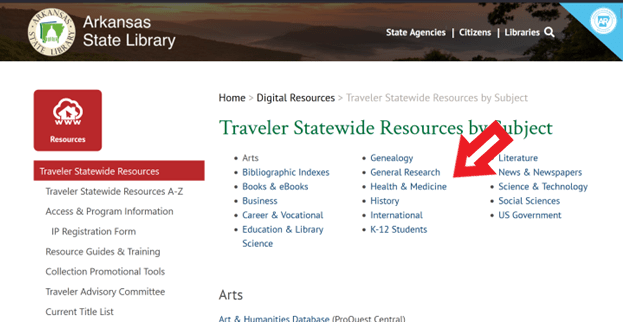
You will see several database options.

These databases are all from Proquest. The Health and Medical Collection collates several of the individual databases together, so it might be your best option if you have a more general field you want to search for or if you’re not entirely sure what specific medical database would have the information.
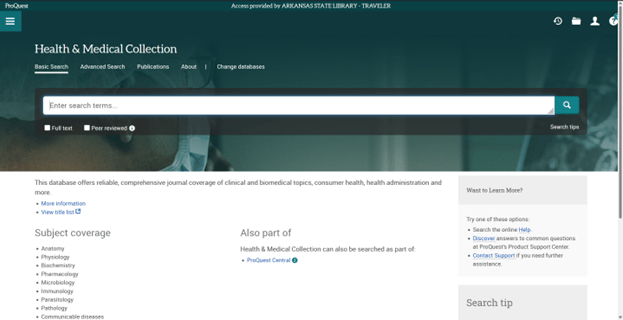
Since I am typing this as Northwest Arkansas is under a full assault by tree pollen, we are going to search for information on tree pollen allergies!
Using a couple of different search terms (“pollen allergies” and “tree pollen allergies”), we instantly have access to numerous medical studies about pollen from around the world.


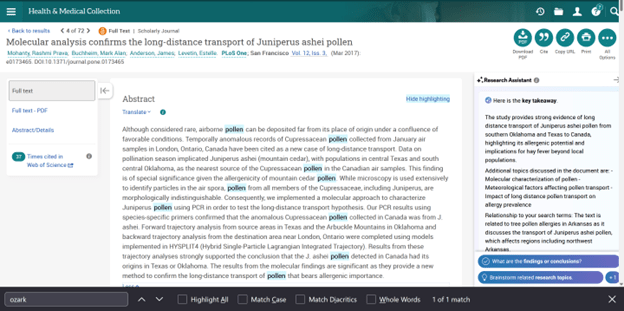
I even poked around a little more and narrowed the results to Arkansas, yielding–among other studies–one that shows how a specific type of pollen (mountain cedar) can be carried from the Ozarks to Canada.

If you have a specialized interest and have a good idea of which database would cover it, you can also narrow your focuses to those specific databases.
There’s a Consumer Health database. Now you can also search for pollen here, as well, but we’re not going to keep beating that topic into the ground. The database itself suggests using it for everything from sports injuries to women’s health issues to women’s or children’s health concerns to dentistry to vision. In essence, if you’re looking for information on many common everyday health concerns for you or your family, this is likely a good starting point.
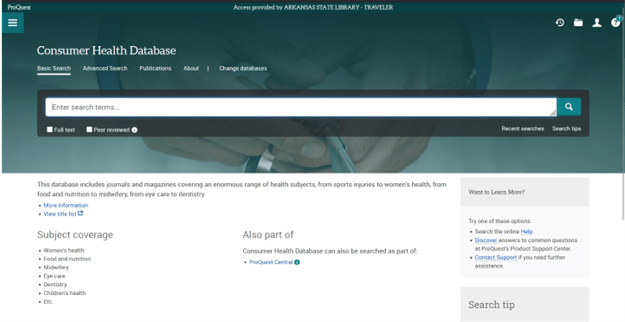
Just as an example, you can search for cataracts, and again, you get a lot of medical studies about that specific issue.

If you want more general information, then go to the lefthand side of the screen and narrow the search results by Source Type. You can click on the name of the source type you want.
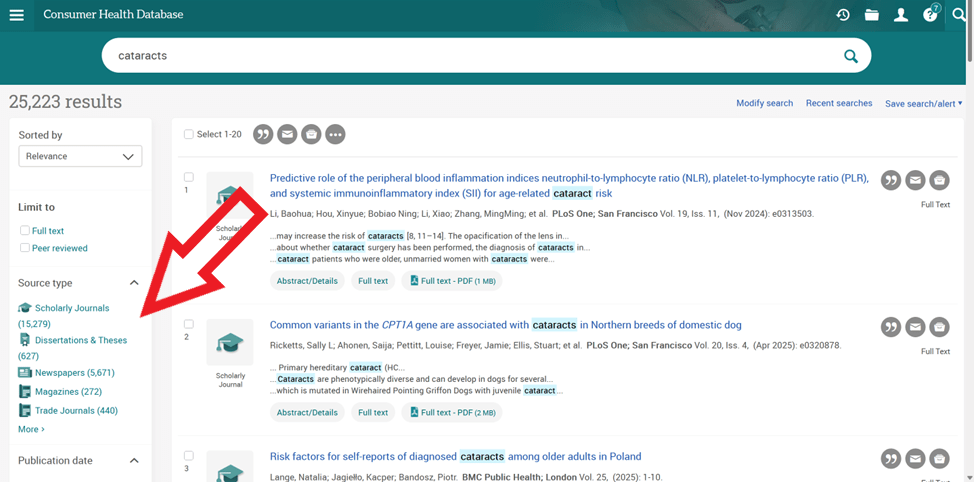
That way you can bypass more specialized scientific journals, which are intended for researchers and medical professionals, and instead read informative articles more geared toward laypeople. I’d suggest using the newspapers, magazines, and website filters. When you do, these are the results you get.
Newspapers:

Magazines:

Websites:
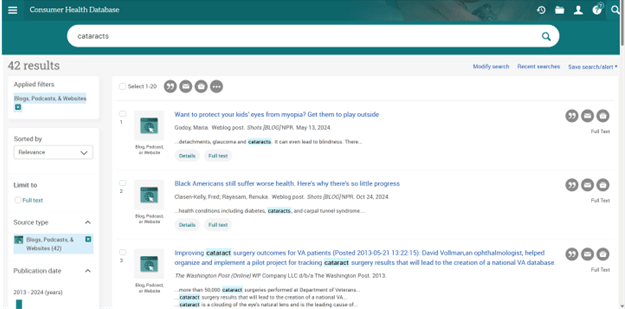
The results it yields are going to be more general interest and accessible than specialized studies.
You can use these filters on any of the databases, not just this specific one or just the health ones.
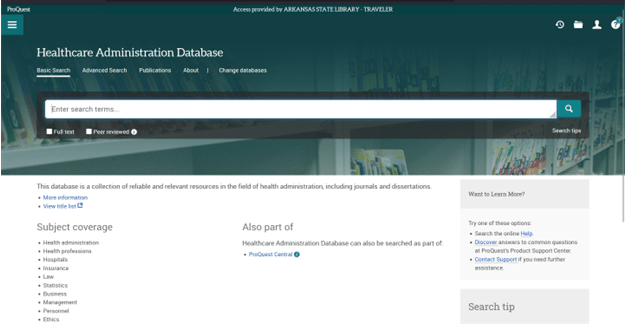
Also, there’s a Healthcare Administration database. This is definitely a more specialized area of interest, but it’s a great resource if you work in this field or are a student learning about this topic.
The Medical database specifically covers clinical and biomedical research. I’d recommend this database to anyone who is specifically looking for in-depth research on a medical topic.

There’s also a Nursing and Allied Health database. Like the Healthcare Administration database, this one will be particularly useful for people already working in these fields or for those studying to do so. Fields covered here include physical and occupational therapy, dietetics, and dental hygiene.

Finally, for these interconnected databases, there’s also a Public Health database. If you want information on communicable diseases, addictions, or other public health issues, here’s the place to be.
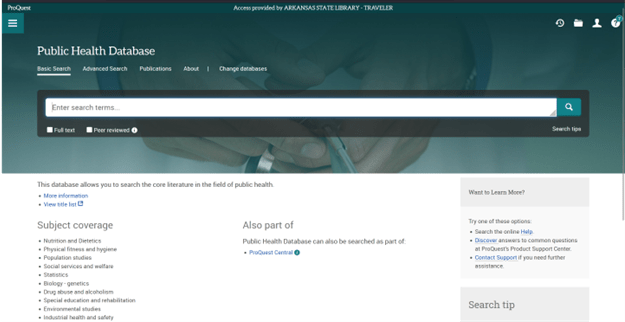
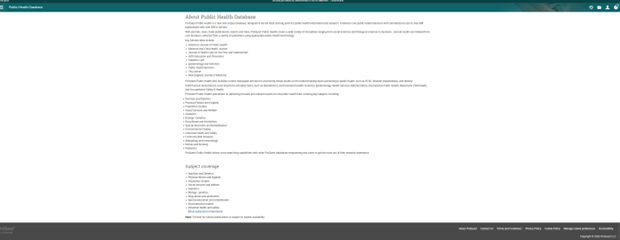
If you’re not sure whether the database has information on what you’re looking for, click on More Information under the search bar.

You’ll get a more detailed breakdown of not only the topics covered but also the journals and publications included.
You’ll also see that there’s a MEDLINE database. This specifically provides U.S. National Library of Medicine citations dating back to the 1940s. Its focus is biomedical and life science journals. Because it is focused on citations, you often cannot view the full article and can only see the abstract. If you want to read the full articles or access more general information, this is not going to be the best database for you to use. But depending on your research task (especially if you’re searching for a class you’re enrolled in), this could still be a helpful resource that provides information not available on the other databases.

If you would like more information on how to navigate any of the databases, health-focused or otherwise, stop by the library and ask!
What’s your favorite digital resource the library offers? Do you use the Traveler databases? Which of these databases are you most excited to try?

 Berryville Book Buzz
One thought on “Exploring Our Digital Research Tools: April”