
We have a lot of fantastic digital resources, many of them courtesy of the Arkansas State Library. Because we’re a library in Arkansas, we have access to their Traveler Database. For this entire year, every month, we’re going to look at the different features available on these databases. For this month, we’re going to focus on the science and technology resources.
To get to the science and technology resources, follow the directions in the first post of this series.
Once in the Arkansas Traveler database, click on Science & Technology.
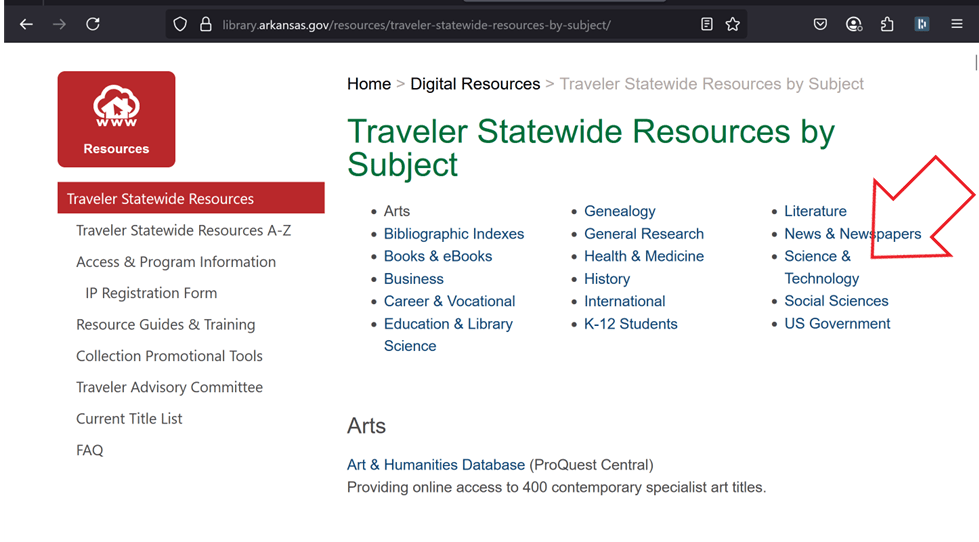
Once you have clicked on the link, it will take you to a list of numerous science databases we have access to from Proquest and Infobase.
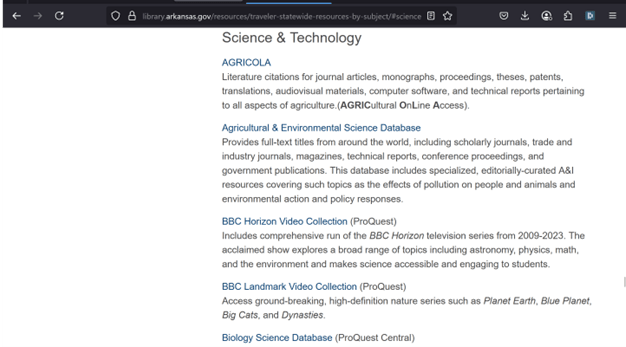


The BBC video databases listed here include stunning, well-made nature and science documentaries that you can stream from home.
BBC Horizons is a long-running program that airs episodes on all things science. It aims to make science interesting and accessible for all and covers issues of current interest. Its episodes include looks at natural disasters, allergies, the solar system, diets, and disease.

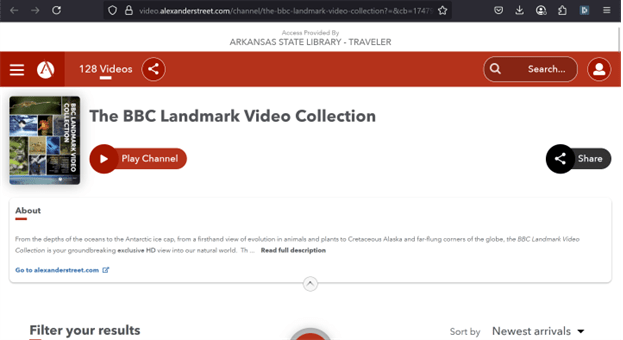
BBC Landmark features other science documentaries from the BBC. Many of these focus on animals and the continents of the world. You can travel via video to Australia, Antarctica, Africa, and the Arctic; get up close and personal with big cats, primates, and penguins; and learn about ecosystems like the ocean, the savanna, and volcanoes. All without ever leaving your home!
We also have some great interactive science sites from Traveler. Science Online offers modules, videos, experiments, diagrams, and biographies about all fields of science. You can complete a 10-lesson module on the world’s biomes, watch videos on weather forecasting and tides, and do interactive experiments about classifying stars and the periodic table and more. This is a great supplement to science classes.

Today’s Science is also geared toward kids and seeks to connect what they learn in classrooms to science in the world all around them. It includes articles on contemporary issues in science, conversations with scientists, and even suggested research topics.

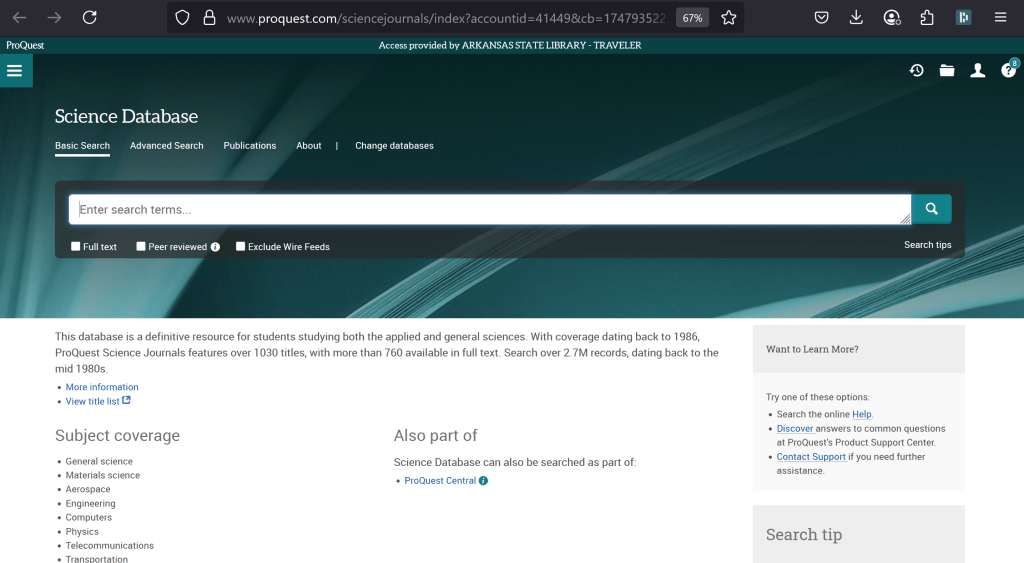
There is also a general database for science. This database covers everything from earth science to biology to physics and includes specialized material on aeronautics, telecommunications, military science, and more and would be a useful resource for anyone researching a science paper or interested in learning more about specific science topics.
Another database with a fairly broad focus for research papers is STEM, which highlights science, technology, engineering, and mathematics journal articles.
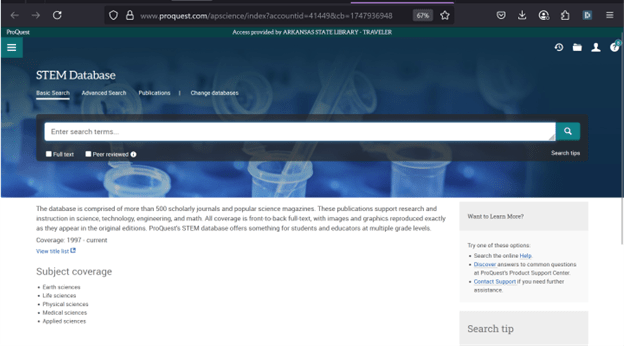
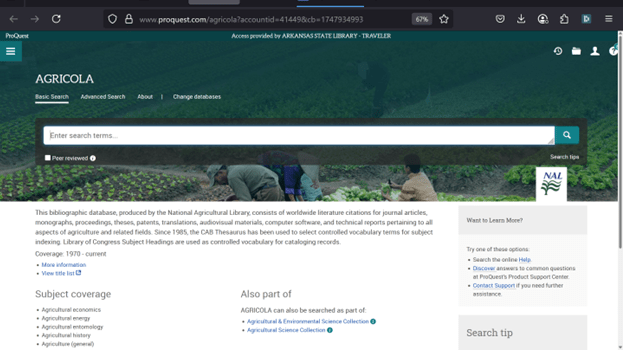
The databases include multiple resources on agriculture.
AGRICOLA is solely devoted to agriculture. You can find journal articles, patents, technical papers, and more here.
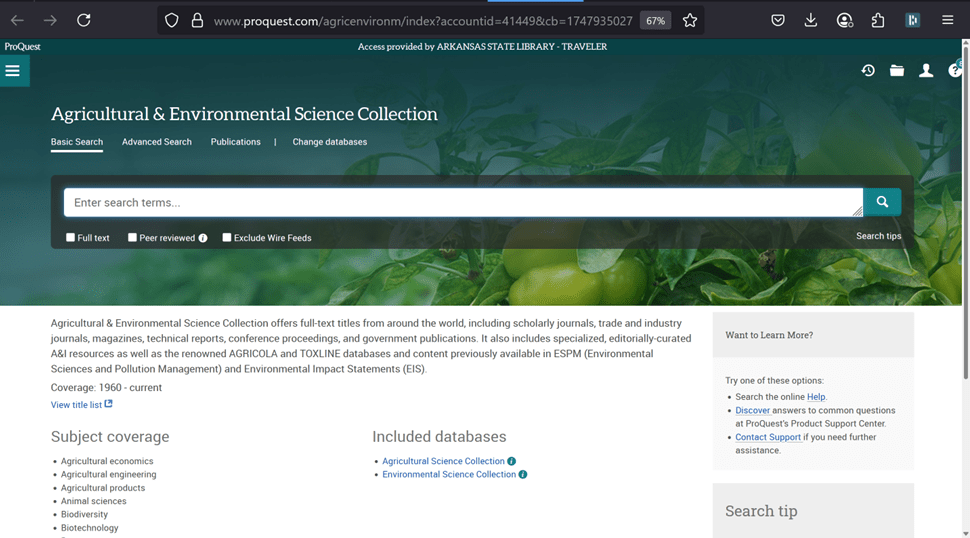
The Agricultural and Environmental Science database includes AGRICOLA, as well as articles on environmental science.
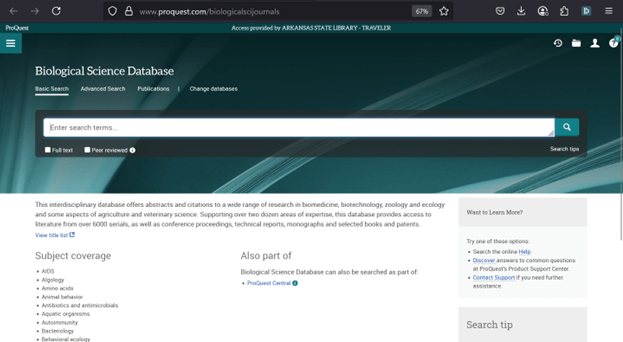
The databases also include Biological Sciences, which features research articles on biology, zoology, and ecology, and Computer Science, which covers research on multiple facets of computer science and information technology.
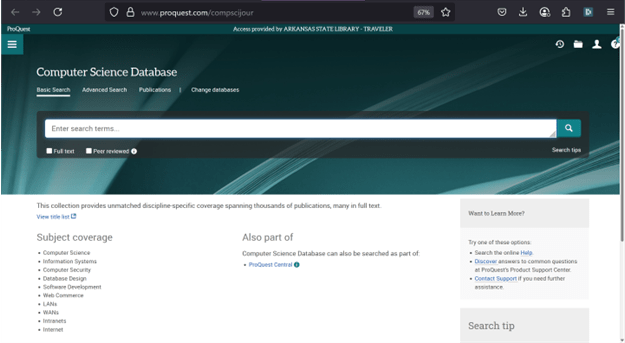
There is also a Telecommunications database that features research on technology, information science, electronics, and computers.

If you would like more information on how to navigate any of the databases, stop by the library and ask!
What’s your favorite digital resource the library offers? Do you use the Traveler databases? Which of these databases are you most excited to try?

 Berryville Book Buzz
One thought on “Exploring Our Digital Research Tools: May”