

Usually, I try to review newer releases on here, but every now and then, I read something so good that I just have to write about it, like this book that’s been out for 20 years. It may not be new, but it’s new to me!
The Lost Painting is nonfiction about the quest to locate a famous Caravaggio painting, centuries after it was lost. The premise may not sound like a page-turner, but the result is as gripping as any detective novel as the book takes you through archives and museums across Europe.
I’ve been a Caravaggio fan since I was a teenager. His striking, dramatic paintings caused a stir during the Italian Baroque period in the late 1500s and early 1600s. Their realism electrified the people who saw them but also generated a lot of controversy from people who were offended by the dirty feet, grimy fingernails, and ordinary people he captured on canvas.
Caravaggio himself didn’t help his case with his erratic and often violent behavior. He died young, on the run after committing murder, and left behind a relatively small body of work. He is best known for his sizable church altarpieces, many of which still hang in their original settings, but some of his other work has been lost to time. One of the most famous missing paintings is The Taking of Christ, which captures the moment Jesus is arrested in the Gethsemane.
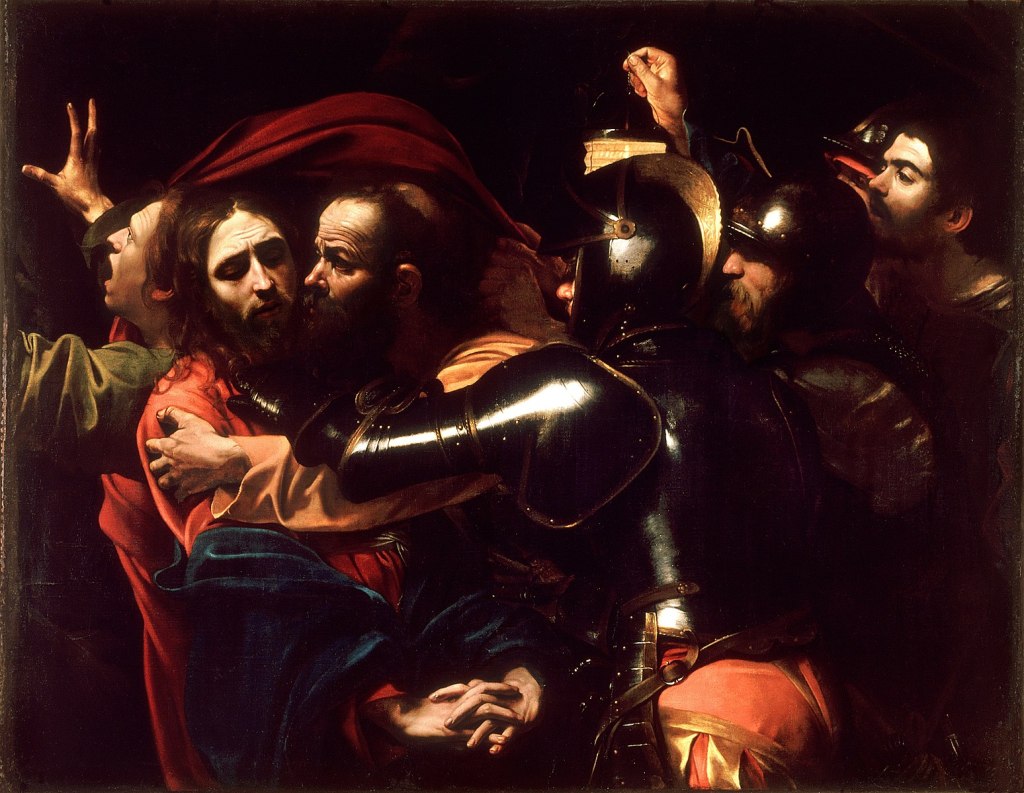
Its existence was well attested in its time, but by the 1700s, it had become lost. Fast forward to the early 1990s, and two Italian grad students, Francesca and Laura, start to follow a promising lead about the painting, buried in an obscure family archive. Meanwhile, almost simultaneously, a disgruntled art restorer in Dublin, Ireland, stumbles across an interesting find during what should be a routine restoration job.
Harr, a reporter who’s worked for The New Yorker and The New York Times, is a skilled writer who perfectly captures the various personalities involved and makes their investigations, much of which involves pouring through old records, compelling.
There’s a lot of drama among the people captured in the book, which Harr conveys evenhandedly–the 2 Italian grad students who do a lot of thankless work for their mentor, the eccentric Englishman who’s a Baroque art expert and encourages young scholars while also engaging in heated rivalries with other historians, the crotchety Italian professional art restorer who feels exiled to Ireland.
He also does a good job of delving into the minutiae of their work, from the logistics of restoring art masterpieces to the diplomacy required to convince an elderly reclusive noblewoman to open the family archives. This isn’t a biography of Caravaggio, though it does also include the basic outline of his life, but it works well as both an introduction to him and his work and as a supplement if you’re already familiar with him.
Recommended for anyone who loves history, art history, or stories about researchers.
And if you find yourself wanting to know more about the man behind the painting, we have a number of other books about Caravaggio in the system as well.
They include a thorough look at both his life and art in Andrew Graham-Dixon’s scholarly Caravaggio: A Life Both Sacred and Profane, which I highly recommend.

We also have Francine Prose’s Caravaggio: Painter of Miracles and Marissa Moss’s Caravaggio: Painter on the Run, which are less exhaustive but more accessible for readers who want a general sense of his life.

Do you like Caravaggio’s work? Who’s your favorite painter? What’s your favorite book about art? Tell us in the comments! As always, please follow this link to our online library catalog for more information on these books or to place them on hold.

 Berryville Book Buzz