
We have a lot of fantastic digital resources, many of them courtesy of the Arkansas State Library. Because we’re a library in Arkansas, we have access to their Traveler Database. For this entire year, every month, we’re going to look at the different features available on these databases. For this month, we’re going to focus on education resources, just in time for back to school!
To get to the education resources, follow the directions in the first post of this series.
We are going to look at 2 different sections here but first up–Education & Library Science.
Just click on the header with that name.
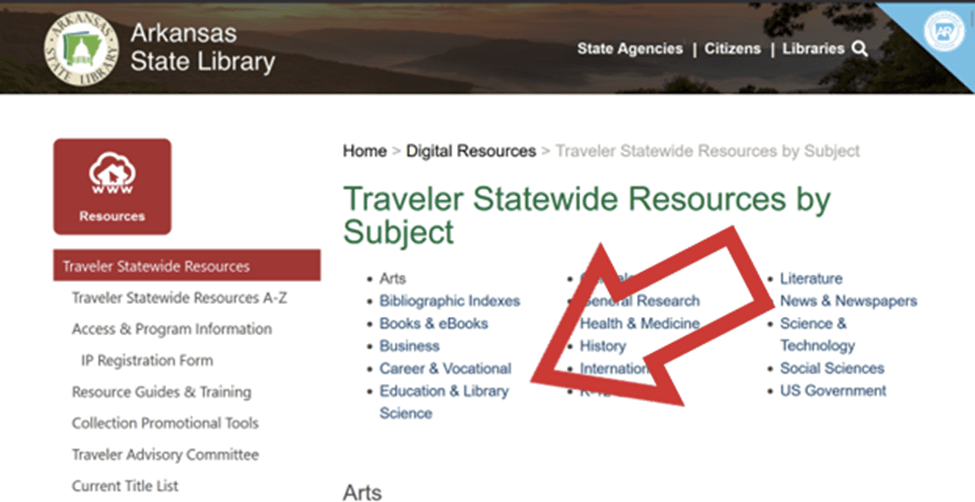
Traveler contains several databases specifically for students studying education, and that is what is covered in these sections. That and resources for students of library science.
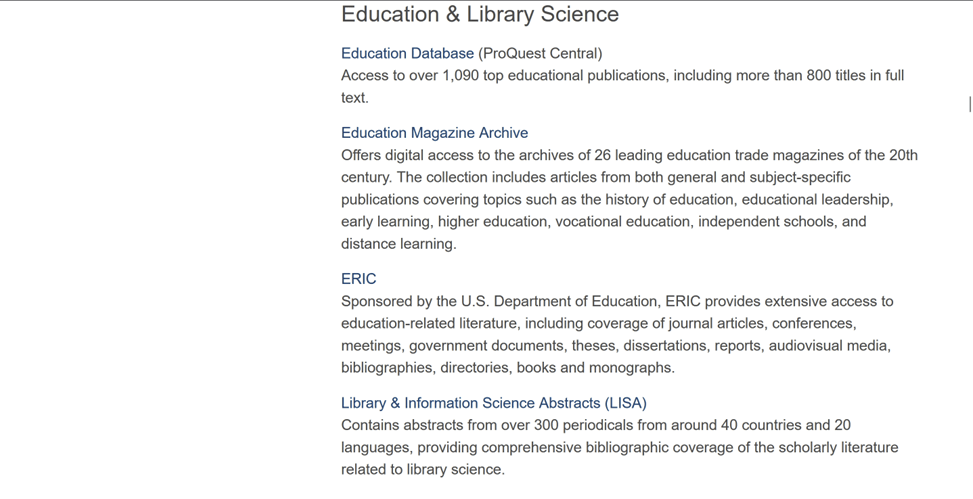

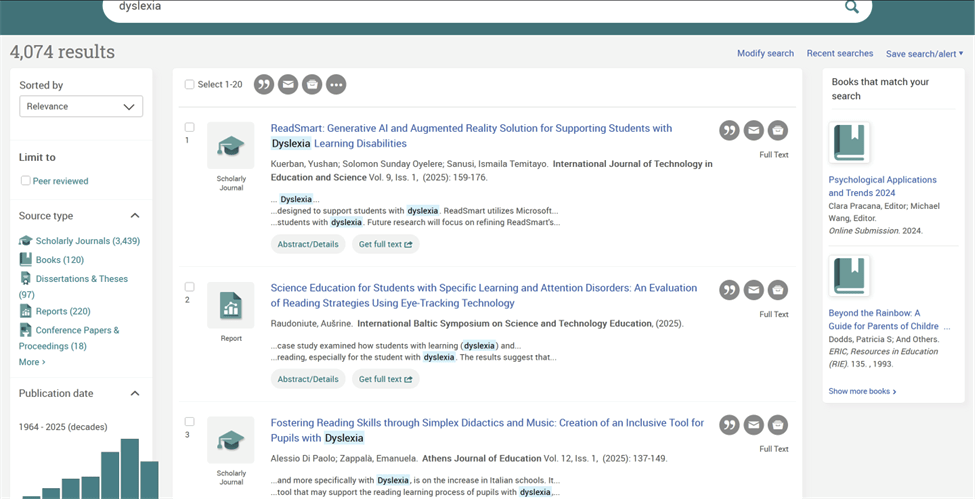
The first database–Education–is a comprehensive scholarly database that covers all education levels. So, early education students all the way to college professors will find relevant articles here on everything from special education to adult education.

I typed in “dyslexia” just to see what comes up, and I quickly found articles that covered everything from high schoolers with dyslexia learning a second language to cutting-edge case studies on teaching children with dyslexia to read.
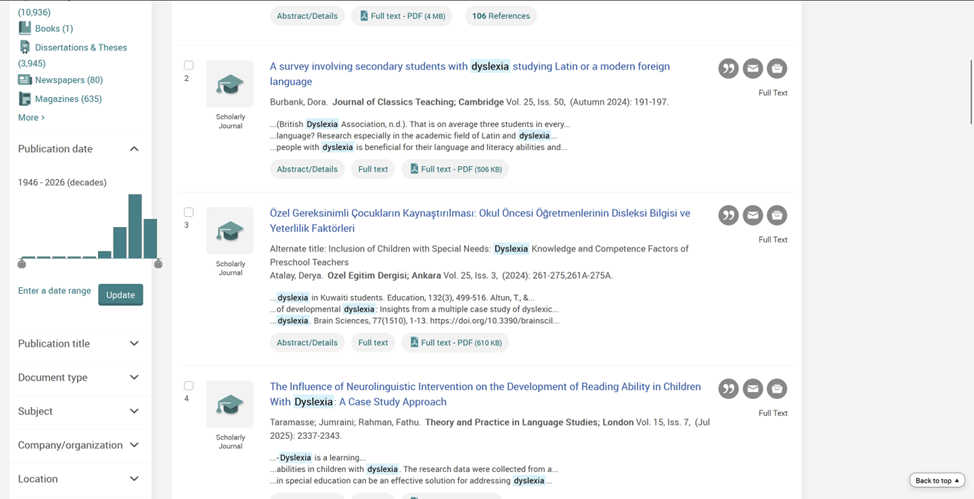
The ERIC database also has scholarly articles on all facets of education, courtesy of the Department of Education.

Searching for “dyslexia” here yields different but equally scholarly and current results as using Education.
The Education Magazine database, meanwhile, compiles articles from the last decades of leading education magazines. These articles are intended for working teachers to keep them current in the field.
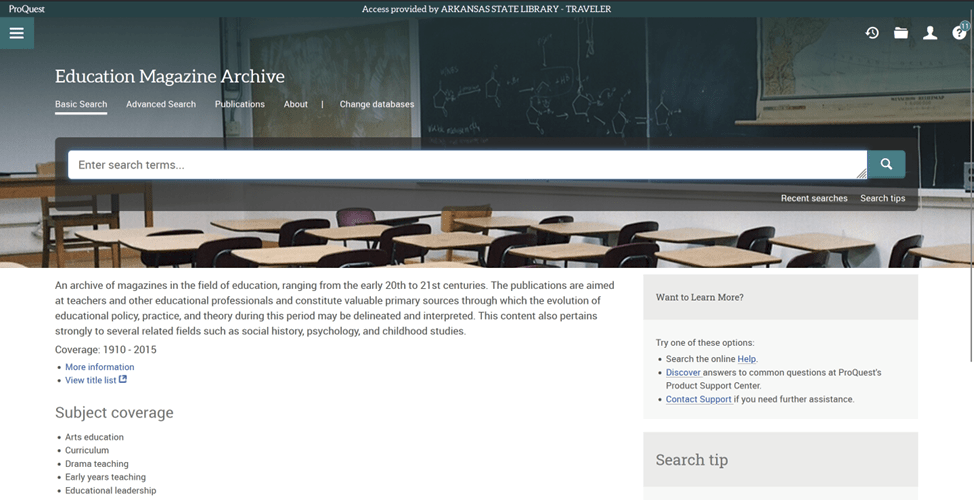
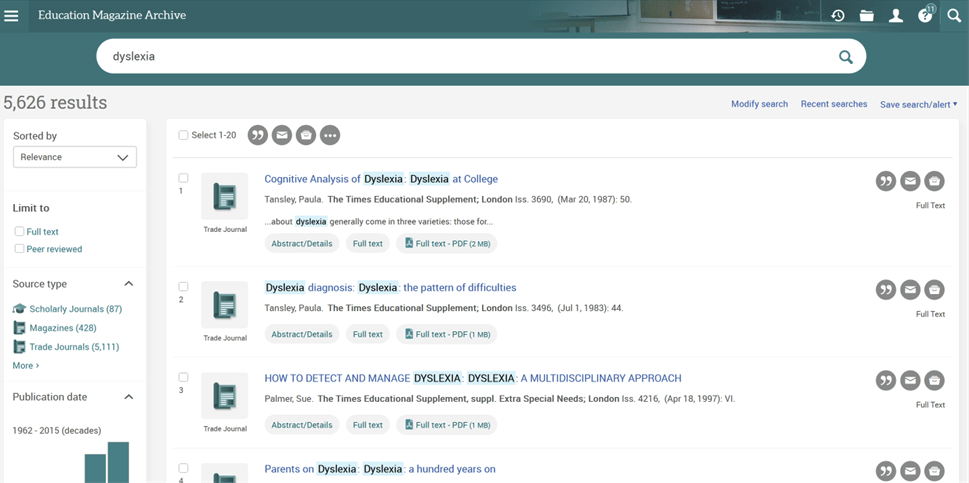
When I type “dyslexia” into this database, I get less current results but a lot of articles on how to diagnose and manage it in the classroom.
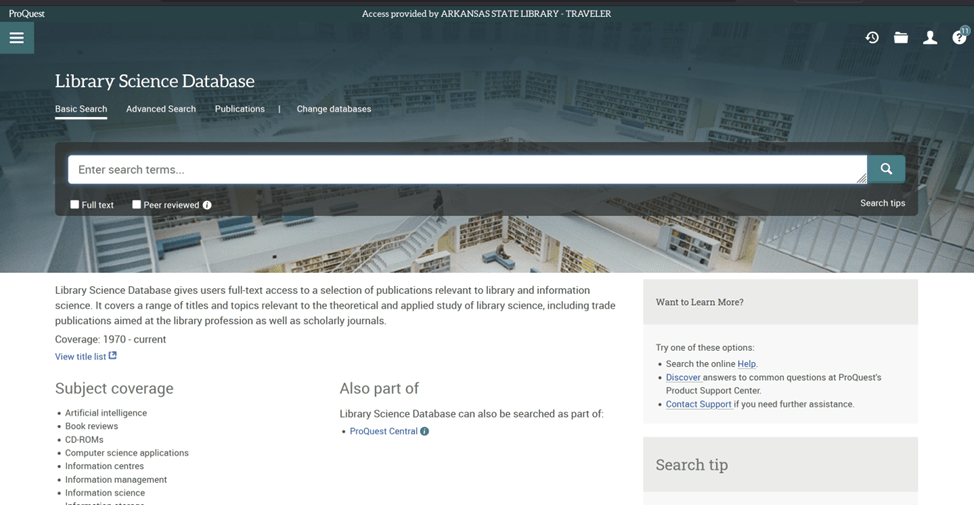
Traveler also gives us access to the Library Science Database, which features scholarly articles specific to library science and information technology.
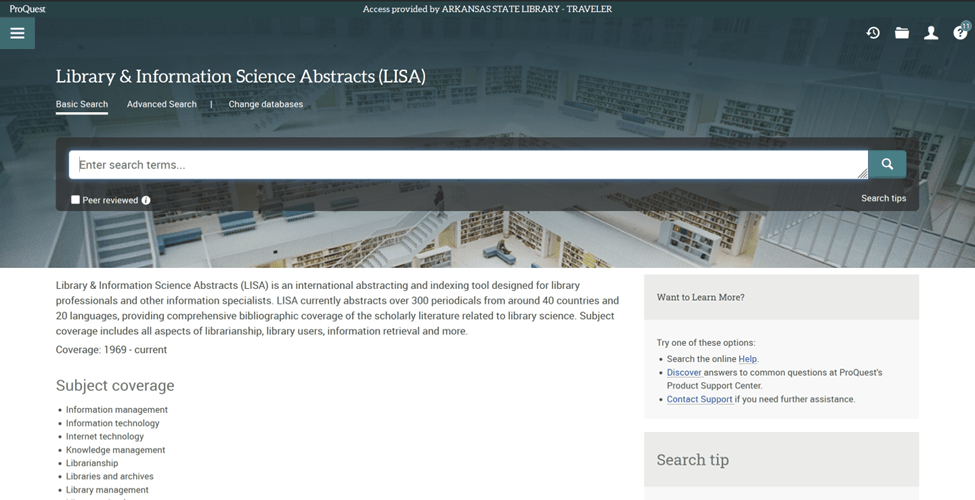
The LISA–Library and Information Science Abstracts database–provides a similar service, though it focuses on abstracts of articles rather than the full-text articles themselves.
Research Companion is a unique tool that can be used by educators to help students learn how to do research. It features modules on finding, evaluating, and using sources, so students get to learn about everything from choosing topics for papers to finding sources to crafting thesis statements to avoiding plagiarism.

If you are a teacher, parent, or guardian more interested in finding resources for kids/teens rather than databases geared toward education professionals, go back to the top of the Traveler Database system and click K-12.

This will take you to a wide range of resources intended for kids and teenagers.
Many of these have already been covered in previous installments of this series or will be in future installments, so I won’t be covering them in-depth here, but they feature everything from BBC educational documentaries on nature and the world to current events research to multiple World Book resources that even include educational ebooks for kids that are available in their entirety. And all free! This is a great resource for any curious kid or teen!
What’s your favorite digital resource the library offers? Do you use the Traveler databases? Which of these databases are you most excited to try? Tell us in the comments!

 Berryville Book Buzz
One thought on “Exploring Our Digital Research Tools: August”