
We have a lot of fantastic digital resources, many of them courtesy of the Arkansas State Library. Because we’re a library in Arkansas, we have access to their Traveler Database. For this entire year, every month, we’re going to look at the different features available on these databases. For this month, we’re going to focus on history databases and bibliographical indexes!
To get to the education resources, follow the directions in the first post of this series.
We are going to focus mainly on the history databases since the bibliographical indexes overlap with other databases already explored.
Just click on the header with that name.

You’ll see 4 databases listed, but it is really 2 main databases–one is from ABC-Clio and the other is from ProQuest.

The ABC-Clio databases are all on the same system, which you have to log into separately. Just select the Carroll & Madison Library System, and it should take you to the main page.

The two focuses are American and African American History. You can access them individually on the main page if you prefer, but it is the same interactive experience as selecting that first option that takes you to both.
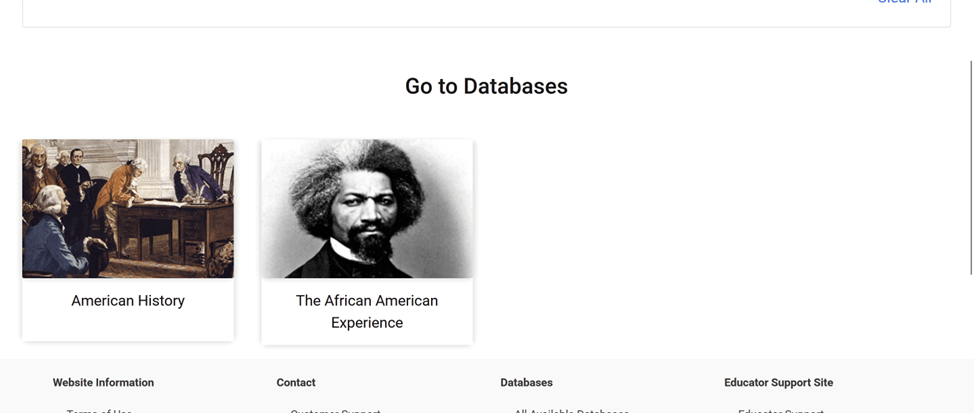

In general, these resources are probably going to be most helpful for middle and high school students.
You can search for specific terms or you can use the time periods they already have pre-selected. More on that in just a second.

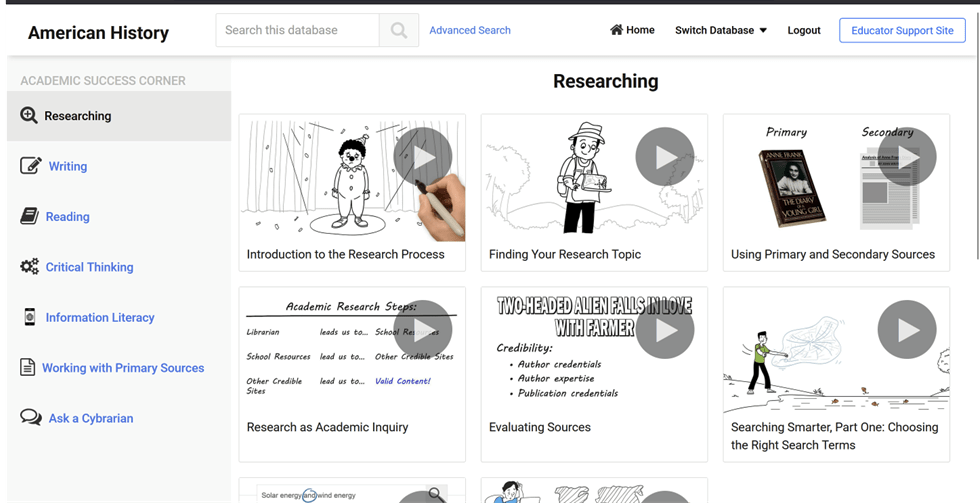
At the bottom of the home page, there are handy Academic Success tabs that cover everything from research to critical thinking to working with primary sources. These provide short informative videos and, occasionally, worksheets that can help you work through the basics of these academic skills that are essential for historians. The bottom right also features a video walk-through of how to use the database.

To explore the time periods the American History database covers, I decided to play around with the Revolutionary Era from the home page, particularly the section on The Coming of Independence, those 18th century years leading up to the American Revolution.
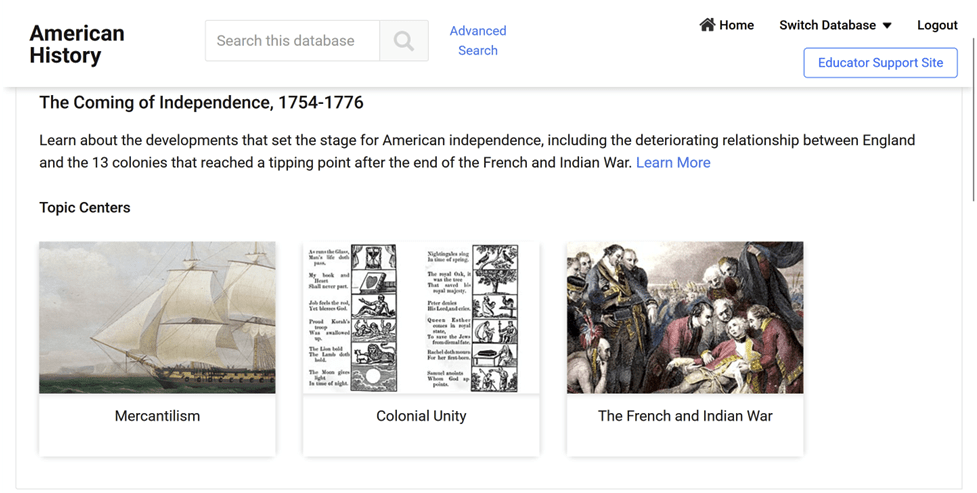
And from there, I selected the French and Indian War.
The left side features a menu of features you can use to navigate the content.

The Overview is a general encyclopedic write-up of this historical event.


The Topic Essentials includes short video overviews, as well as key concepts and vocabulary. It even lets you quiz yourself. Think of it as a good short study guide.


Activities provides a couple of different prompts that guide users through investigating sources about a specific topic. The one I selected is about colonial economics and its impact on warfare.
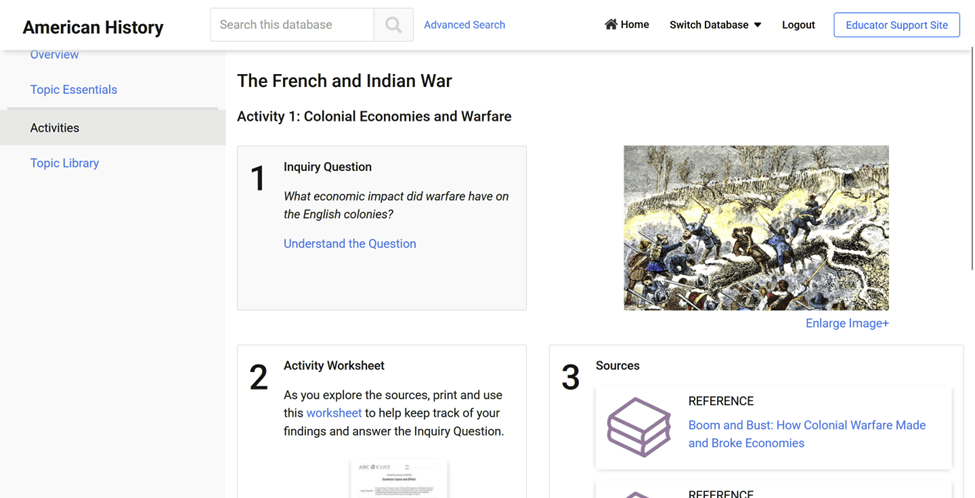
Finally, there’s a Topic Library that links to dozens of other encyclopedic articles within the database on the French and Indian War.
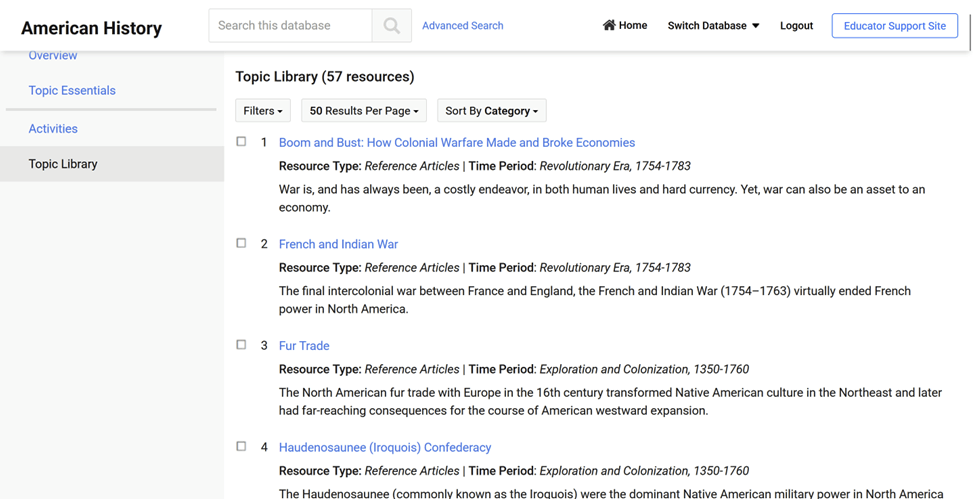
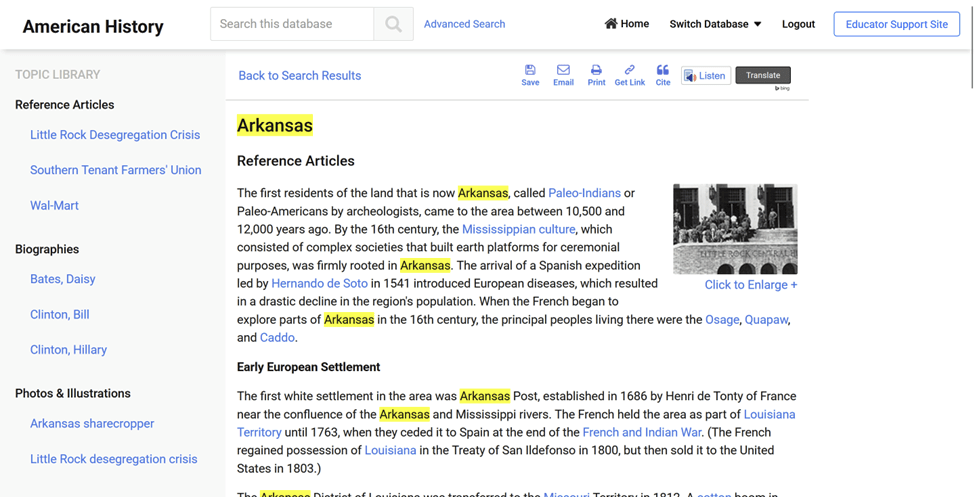
If you’d rather search for a specific term, you can do that as well. I decided to see what searching for Arkansas would yield.

It leads to articles on the state, as well as historical photographs.

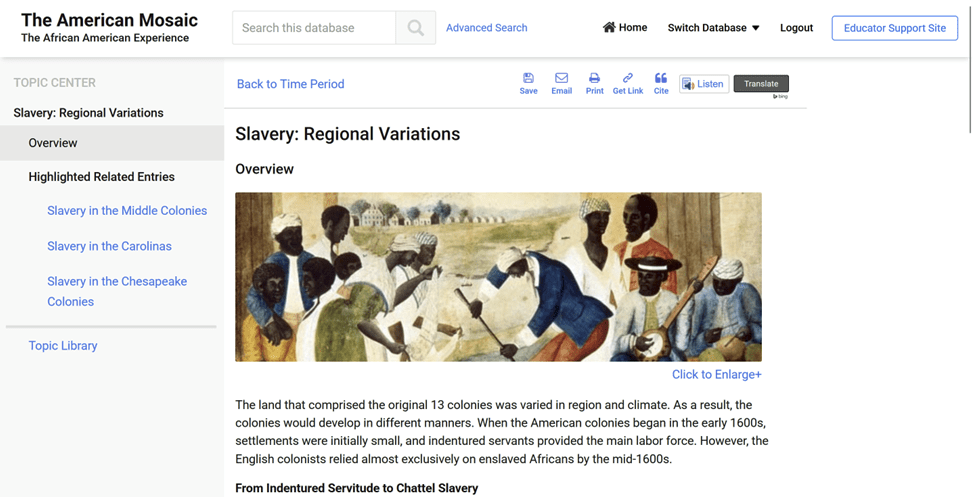
The African American Experience database is set up similarly.

For the time periods, its Africans in Colonial America page covers the same approximate years as what we were looking at earlier for the American History database and similar features.

A search for Arkansas in this database also yields encyclopedic articles and photographs.


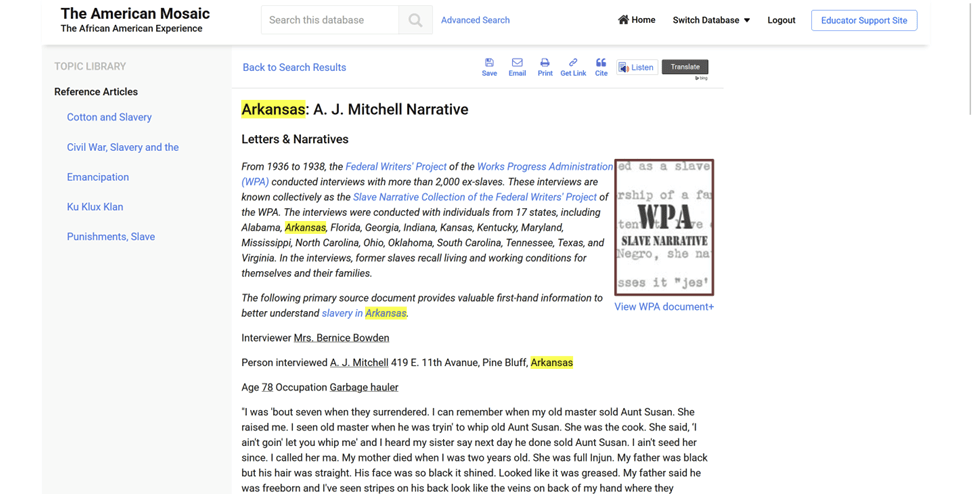
This database also includes extensive accounts of former slaves, collected during the Great Depression by the WPA. These primary sources are alphabetized by name and cover numerous states, including Arkansas. In fact, the first of these narratives listed is from A. J. Mitchell of Pine Bluff, who was interviewed in his late 70s.

If you’re looking for material for a college-level history course, the ProQuest History Study Center database will have more specialized articles and primary sources than what the ABC-Clio databases contain. It also features extensive documents from the FDR, Truman, and Eisenhower presidential administrations.

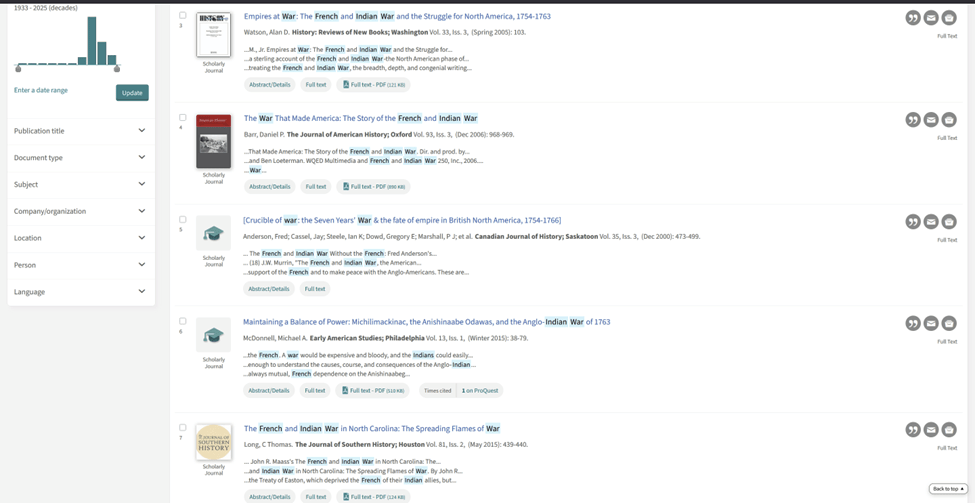
I searched for French and Indian War there as well, and as you can see, the results yield much more in-depth articles. Whereas the ABC-Clio material was geared more toward students and feature introductory level history, these ProQuest results are, essentially, articles by historians for historians.
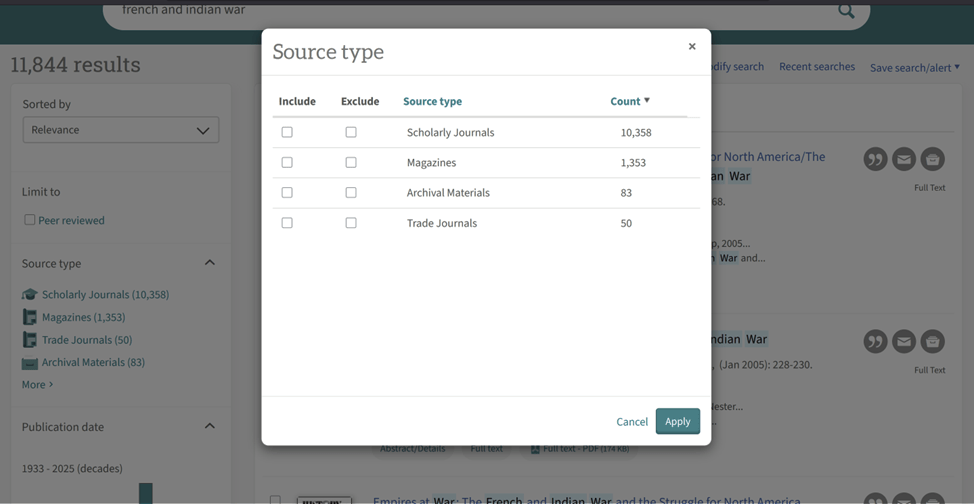
You can use the filters on the left to specify whether you want articles from scholarly journals, magazines, archives, or trade journals.
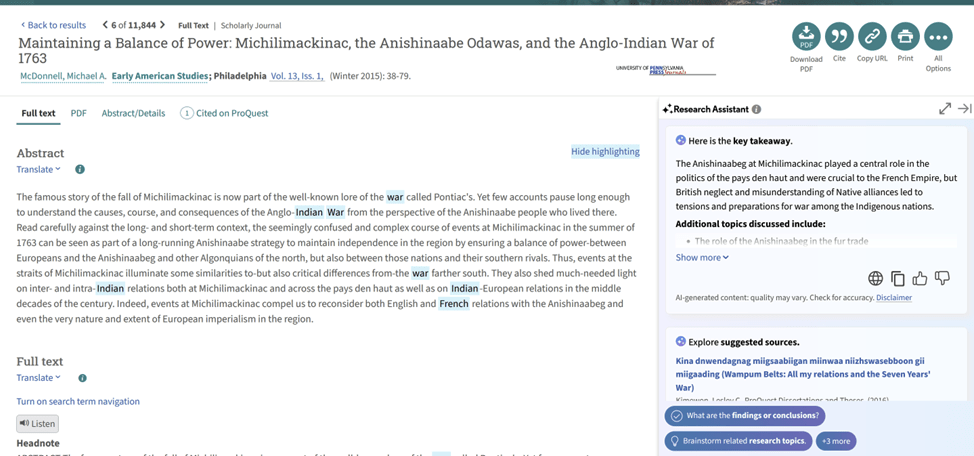
These results include both full-text articles and full-text book reviews. The latter can be a wonderful resource for helping researchers preview whether a book will be helpful for them and is worth tracking down on its own merit.

I also searched for Arkansas here but had to narrow the results because it pulled up anything with the word Arkansas in it, often leading to material from Arkansas-based institutions that, while excellent, didn’t necessarily have anything to do with Arkansas history. I decided to narrow the topic to “Arkansas and lumber” and got much more useful results.


If you have questions on how to effectively use search terms in the databases, this is something we can help you with!
As noted earlier, you can also find bibliographic indexes for certain disciplines on these databases.
On the home page, select Bibliographic Indexes.

It will then take you to 3 databases we have already covered in agriculture, education, and health/medical.

However, I wanted to highlight these simply because people can sometimes underestimate how very helpful a bibliographic index is during research.
If you’re unfamiliar with abstracts, these resources can sometimes be frustrating because you’re looking for the full article and only get a summary in the abstract. However, when you’re conducting an extensive research project, abstracts help you in the same way the book reviews are helpful in historical research. They can save you from reading the whole article (or book), only to discover it isn’t actually what you need. Depending on the abstract and/or book review, you may even find helpful information that means you don’t need to hunt down the full original source. They’re not right for every researcher and every research project, but when they are, they’re invaluable!
If you want more information on how to use any of our databases, including how to use the different types of material found in them and how to search effectively, please just stop by the library and ask!
What’s your favorite digital resource the library offers? Do you use the Traveler databases? Which of these databases are you most excited to try?

 Berryville Book Buzz