
F. Scott Fitzgerald’s classic The Great Gatsby is the book for the CAMALS Foundation’s second annual Community Book Read. The novel was first released on April 10, 1925, so it is celebrating its 100th anniversary this year. Read more to find out how you can get a free copy and participate in the fun.
Continue reading “Community Book Read: F. Scott Fitzgerald’s The Great Gatsby”Category: classics (books)
Harper Lee’s To Kill A Mockingbird
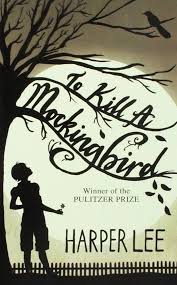
Usually, I try to highlight newer releases on the blog, but this year, the CAMALS Foundation is launching a new Community Book Read, and the first book selected for it is perennial favorite To Kill A Mockingbird. And I thought it was the perfect opportunity to revisit this classic.
Precocious Jean Louise Finch–or Scout as she’s affectionately called by her family and friends–has a comparatively idyllic life in Depression-era Alabama. The youngest child of a widowed lawyer, she enjoys playing with her older brother Jem and their quirky sometimes neighbor Dill in their small town and being read to by her father Atticus. But her carefree existence comes to a screeching halt when her father begins representing Tom Robinson, an African American accused of rape. Scout is too young to always follow what is happening, but she recognizes the palpable shift in public opinion toward her family.
Continue reading “Harper Lee’s To Kill A Mockingbird”Walk a Mile in My Shoes: October
This year, our theme is “Walk A Mile In My Shoes.” The idea that you can’t understand someone (and shouldn’t judge them) until you’ve walked a mile in their shoes is a pretty common sentiment. And research has shown that reading fiction is one way to really get such a walk going. So, that’s what we are going to do this year: use fiction (and some nonfiction when we just can’t resist) to take walks in someone’s shoes. We hope you join our journey. For October, our theme is domestic violence.
Continue reading “Walk a Mile in My Shoes: October”Walk A Mile In My Shoes: February
This year, our theme is “Walk A Mile In My Shoes.” The idea that you can’t understand someone (and shouldn’t judge them) until you’ve walked a mile in their shoes is a pretty common sentiment. And research has shown that reading fiction is one way to really get such a walk going. So, that’s what we are going to do this year: use fiction (and some nonfiction when we just can’t resist) to take walks in someone’s shoes. We hope you lace up those sneakers and join our journey. For February, we’re going to be looking at a growing issue in Carroll County–homelessness.
Continue reading “Walk A Mile In My Shoes: February”What a Wonderful World: Hot Chocolate Brown
This year, our theme at the library is What A Wonderful World. We’re focusing on a different color for each month, and December’s is hot chocolate brown. To that end, we’re highlighting books at the library with that color (or something close to it) on the cover!
Continue reading “What a Wonderful World: Hot Chocolate Brown”What A Wonderful World: May
This year, our theme at the library is What A Wonderful World. We’re focusing on a different color for each month, and May’s is violet. To that end, we’re highlighting books at the library with that color (or something close to it) on the cover!
Continue reading “What A Wonderful World: May”E.B. White’s Charlotte’s Web (1952)

Wilbur is a sweet pig with a big problem. He’s, well, a pig. And no matter how delightful of a friend he is to young Fern, the young girl who saves him from a tragic early end, or Charlotte, the spider who lives in the barn, he’s still going to end up as Christmas dinner. That is, unless Charlotte can think of a way to save him. . . .
Confession: I’ve never read this book until now. Yes, I know that makes me a weirdo–who hasn’t read Charlotte’s Web?, you may ask. Well, me, that’s who. However, since it was the winner of the Great Berryville Read and is now officially our town’s favorite book, I decided to remedy my ignorance. And I’m glad I did.
Daphne Du Maurier’s Rebecca (1938)
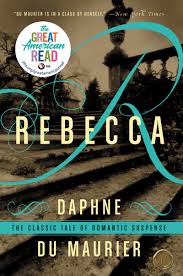
Asking people about which book they’d select for the Great American Read has been an fascinating exercise in armchair psychology this past few months–at least for me. Some folks have an immediate answer while others take some real time thinking it through.
Put me down as one in the thinking category. I couldn’t even pick 1! I finally narrowed my picks down to 3, but that was only after coming up with some perimeters to consider and pondering whether or not it should reflect personal favorites or some grand statement about the best/most influential American novel and resonant themes in American literature. (Gotta put that English degree to work every now and then.)
But, truth be told, if I were just picking one book solely on personal enjoyment, it would probably have to be Daphne Du Maurier’s Rebecca.
Betty Smith’s A Tree Grows in Brooklyn (1943)
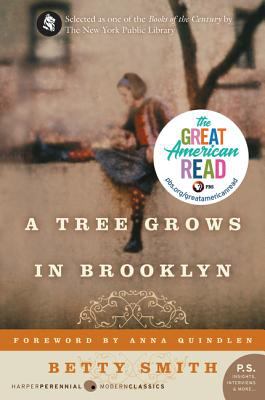
At the Berryville Library this summer, we’re all busy reading the books on the Great American Read list and pondering which ones we’ll vote for in the Great Berryville Read. When I mentioned the Great American Read to my friend and one of my former English professors Elise Bishop, she mentioned really enjoying A Tree Grows in Brooklyn. Well, that was one I hadn’t read, so I was determined to make it one of my selections. I’m glad I did because I really enjoyed it! (Thanks again for the great suggestion, Mrs. B!)
Continue reading “Betty Smith’s A Tree Grows in Brooklyn (1943)”
From Page to Screen: The Man Who Would Be King


We’ve been focusing on schools this month, but not everything worth knowing is learned in school. Sometimes the school of hard knocks delivers more memorable lessons. . . .
Daniel Dravot and Peachy Carnahan have decided that the 1880s British Empire does not appreciate their talents. And the two former British army sergeants do have a point. They feel like they’ve contributed more to building the Empire than administrators and British authorities, who are less than appreciative of their military exploits or how they have occupied themselves once they were discharged. Specifically, the powers that be are not pleased with Danny and Peachy leaving a trail of blackmail, fraud, and smuggling, among other things, in their wake.
They know that going home to England would mean menial work, which doesn’t seem very enticing given their adventures in India. But they also realize that further prospects in India are now limited, as well.
The two friends, thus, decide that they will go away to the remote, mysterious kingdom of Kafiristan. Once there, they will use their martial skills to serve as mercenaries and ingratiate themselves with a local chief as a stepping stone for them staging a coup, setting themselves up as rulers, and robbing the locals of their wealth. It’s not a retirement plan endorsed by most financial planners, but Danny and Peachy are pretty sure it will work out marvelously for them. What’s the worst that could happen?
Continue reading “From Page to Screen: The Man Who Would Be King”
 Berryville Book Buzz