From Page to Screen: Bonnie and Clyde

Jeff Guinn has rapidly became my favorite nonfiction writer. Late last year, I read his excellent book about the infamous Gunfight at the OK Corral and then back in May I read and profiled his most recent release, a superb examination of Jim Jones and Jonestown.

Over Thanksgiving weekend, I read another Guinn book, his examination of infamous Depression-era bandits Clyde Barrow and Bonnie Parker. Mary-Esther has urged me to read it for years–she’s the one who put Guinn on my reading radar–and thanks again to her for introducing me to such a wonderful writer! (Thanks also to my dad for buying me the book. He couldn’t resist reading it himself before he gave it to me, which is just about the best endorsement of the book I can think of. Thanks, Dad!)

Continue reading “From Page to Screen: Bonnie and Clyde”

Sam Quinones’ Dreamland (2015)

Dreamland

Last week, I wrote jokingly about non-professional authors trying their hand at writing a book. This week, we’re looking at an excellent book written by a professional journalist about a very serious (and timely) topic: the opioid crisis.

A few weeks ago, Mary-Esther suggested Sam Quinones’ Dreamland to me. As I suppose is true of many people, I have been following the news about the opioid crisis, but I must confess, that it’s something I knew relatively little about. (Thanks for the wonderful suggestion, Mary Esther!)

Continue reading “Sam Quinones’ Dreamland (2015)”

From Page to Screen: Freaks (1932) and Truevine (2016)

Call me crazy but family secrets, tell-all tales, and circus freaks do go together . . . at least in this movie and book combination!

Last year, one of our library patrons, Vernon, watched 1930s cult classic circus film Freaks and told me, while he was returning it, that it was one of the strangest movies he’d ever seen. He encouraged me to watch it. I imagine because he wanted someone else to confirm that, yes, it’s an odd movie.

So, I did watch Freaks, and about the same time, our library director Julie told me that she had just read a book (Truevine) that mentioned several of the circus performers featured in Freaks. I was not doing “From Page to Screen” features at the time, but I already was thinking about doing something like it and filed this away as a potential combination to write about it in the future. (Thanks to both Vernon and Julie for the suggestions!)

Usually I write about the book and then the movie, but I am reversing that order for this blog. My blog, my rules!

Continue reading “From Page to Screen: Freaks (1932) and Truevine (2016)”

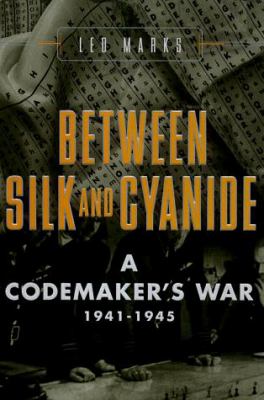
Leo Marks’s Between Silk and Cyanide

Between Silk and Cyanide

Since we’re focusing on letting the light shine on long-held secrets this month, I have a soon-to-no-longer-be secret secret confession: I love reading nonfiction about WWII-era espionage and cryptography. I blame this love on J.C. Masterman’s The Double-Cross System in the War of 1939 to 1945. It’s not in our library system, but it’s well worth requesting through ILL if you also like reading about history and/or espionage. In it, Masterman meticulously and matter-of-factly details the espionage system he ran for British intelligence in turning German agents in Britain into British double agents.

It’s a fascinating book, but it also permanently ruined espionage thrillers for me. I’ve never found a spy novel (or movie, for that matter) that captures the sheer boredom punctuated with sheer terror and the anxiety of the spy life that lurks between the lines of Masterman’s book.

That is, I hadn’t encountered it until I read Leo Marks’s insightful, hilarious memoir Between Silk and Cyanide.

Continue reading “Leo Marks’s Between Silk and Cyanide”

From Page to Screen: The Lost City of Z

It’s one of the great mysteries of 20th century exploration: what happened to Percy Fawcett?

The British military officer, surveyer, and explorer was one of the key figures in mapping and exploring the Amazon. He had become obsessed with the belief that, contrary to what other experts claimed, a large, sophisticated civilization had once existed in the dense jungle. He named that mysterious place “Z,” and he very badly wanted to find it.

In his late 50s, the undaunted Fawcett, his eldest son, and his son’s best friend plunged into Amazonia in 1925, determined to prove the world wrong. They were never seen again.

Much as how centuries before Fawcett conquistadors disappeared looking for the city of El Dorado, dozens of adventurers have also disappeared trying to locate Fawcett and/or “Z.”

After reading and enjoying David Grann’s Killers of the Flower Moon earlier this month, I decided to give his first book about Fawcett and his disappearance, which was recently adapted into a film, a try.

Beware, there be some mild spoilers ahead.

Continue reading “From Page to Screen: The Lost City of Z”

David Grann’s Killers of the Flower Moon

Killers of the Flower Moon

In the 1920s, the Osage tribe of Oklahoma were the wealthiest people per capita in the world after oil was found on their land in the early 1900s. That statistic belies the reality of the situation, though, in which many of the Osage who owned valuable headrights had to have a white guardian to control their money and financial affairs. Nonetheless, much was made of the wealth that was on the reservation.

And in 1921, wealthy tribe members started disappearing and turning up dead. Still others succumbed to suspicious instances of alcoholic poisoning and a mysterious “wasting disease.” People who began investigating the deaths also started disappearing and dying. Within a few years, over two dozen people had died under suspicious circumstances. Eventually, the FBI under a newly appointed director named J. Edgar Hoover were brought in to investigate.

As someone who is interested in the 1920s, true crime, and Native American history, I was really surprised that I had never heard of the Osage “Reign of Terror” when this book was released earlier this year.

Continue reading “David Grann’s Killers of the Flower Moon”

Jeff Guinn’s The Road to Jonestown

Road to Jonestown

Don’t drink the Kool-Aid.

It’s a phrase that has permanently entered the American consciousness, but it always surprises me when people don’t know that it is a reference to the infamous Jonestown Massacre in Guyana in 1978, especially when it is used flippantly.  (I once had a very awkward conversation with a college classmate about that.) Because even though we may laugh at the phrase now, there’s really nothing funny about mass suicide. (Never mind that at Jonestown they were actually drinking mostly Flavor Aid, not Kool-Aid, but that’s a different topic for another day.)

I first heard of Jonestown when I was maybe about 10, 11, 12. There was a documentary commemorating the anniversary of it on PBS, and I remember being riveted by it in absolute horror. In the years since then, I’d read some about the story and also watched on several occasions the famous 1980 miniseries Guyana Tragedy, which stars the late Powers Boothe as Jones in what has to be one of the most chilling performances ever recorded on film.

So, just in general, a recently released book promising to be the most authoritative take on the story yet would have grabbed my attention. But I was specifically compelled to read this one, which was released last month to great acclaim, because its author is rapidly becoming one of my favorite writers.

Continue reading “Jeff Guinn’s The Road to Jonestown”

From Page to Screen: Casino

Hope you were able to join us at Books in Bloom this weekend! I had a great time–got to hear some wonderful talks from talented authors and even acquired a few signed books. I’m already looking forward to next year!

On that note, last week, when we were chatting about authors we’d like to see at Books in Bloom in the future, I promised to unveil two of my picks over the next couple of weeks.

One author I would love to meet and listen to is Nicholas Pileggi. He was a crime reporter in New York City for 30 years, with a special focus on the Mafia. But most people, myself included, are most familiar with him through his books about the Mafia, Wiseguys and Casino: Love and Honor in Las Vegas. He adapted both of them into Martin Scorsese movies in the 1990s, Goodfellas and Casino, respectively.

I’ve been a Scorsese fan since I was a teenager, and though my personal favorites of his movies is probably a tie between Taxi Driver and Raging Bull, I really do enjoy both Goodfellas and Casino.

And because I’ve also found organized crime interesting since I was a child–it’s a little embarrassing how many books I own about the mob–when I found out those movies were based on nonfiction books, I read Pileggi’s books and quickly became a fan of his work in its own right.

Honestly, I’d like to meet and talk to Pileggi just because I’d like to his pick his brain and hear inside stories from his days as a reporter, his research for his books, and his experiences in Hollywood. I’d love to hear his thoughts on what it is like to be both the writer of the original source and the adaptation.

And to that end, I thought we might as well compare his book and his movie about the mob’s fall from power in Las Vegas.

Continue reading “From Page to Screen: Casino”

S.C. Gwynne’s Empire of the Summer Moon

Empire of the Summer Moon

When I saw S.C. Gwynne was a scheduled speaker for Books in Bloom this year, I decided it was the perfect time to try one of his books that had been on my to-read list for a long-time, Empire of the Summer Moon.

I’ve been interested in the American West and Native American history since I was a child–my family can vouch for how weirdly obsessed I was with Son of the Morning Star as a nine-year-old–so I was excited to try Gwynne’s well-regarded history of the Comanche tribe.

Continue reading “S.C. Gwynne’s Empire of the Summer Moon”

From Page to Screen: In Cold Blood (1967) and In Cold Blood (1996)

My love for Truman Capote’s In Cold Blood (which some ungenerous souls might call an obsession) has been well documented on this blog.

But my interest in the story transcends the book. The 1967 film adaptation is one of my favorite movies and is one of the examples I always point to when people claim that a movie can never be as good as the book.

A few months ago, I watched the 1996 miniseries adaptation of the story with my coworker Jen. If the 1967 version is one of the best adaptations I’ve ever seen, the 1996 version is easily one of the absolute worst.

Usually the “From Page to Screen” series is a venue for me to compare and contrast books with their adaptations. But this is my series and my rules, and I’ve decided to bend the rules for this one. So, this month we’re comparing and contrasting two adaptations and exploring why one is considered a masterpiece and the other, well, isn’t. Let’s just call it Screen vs. Screen for this month.

Continue reading “From Page to Screen: In Cold Blood (1967) and In Cold Blood (1996)”