
This year, our theme is “Walk A Mile In My Shoes.” The idea that you can’t understand someone (and shouldn’t judge them) until you’ve walked a mile in their shoes is a pretty common sentiment. And research has shown that reading fiction is one way to really get such a walk going. So, that’s what we are going to do this year: use fiction (and some nonfiction when we just can’t resist) to take walks in someone’s shoes. We hope you lace up those sneakers and join our journey. For April, our theme is Neurodiversity, and we’re profiling books with characters whose brains work in unique ways. Thanks so much to Julie, Anna, and Kelly for helping me research this post!
In Sayaka Murata’s Convenience Store Woman, Keiko is perfectly happy at her job at the local convenience store even if her relatives are less than happy about the 18-year career she’s made out of working there. For Keiko’s traditional Japanese family, they’re concerned she’s never pursued a more ambitious career or had a family, but Keiko has always struggled with social interaction outside of the comforting confines of the store. Then a new employee arrives and complications ensue.

They always say you can’t go home again, but Matthew still tries to in Brad Zellar’s Till the Wheels Fall Off, which we have as an audiobook. As a child in the 80s in small-town Minnesota, suffering from insomnia and undiagnosed ADHD, Matthew often took refuge in his stepdad Russ’s roller rink. He loved the music and he loved spending time with Russ. But then Matthew’s mother and Russ divorce and Matthew and his mother move away. Matthew returns years later as an adult and tries to relocate Russ.

Young adult (YA) fiction has been more proactive in depicting neurodiverse protagonists than adult fiction has. Books with adult characters who have ADHD or autism or any of the other conditions that are defined as neurodiverse can be far and few between, but YA fiction frequently has empathetic depictions of these characters.
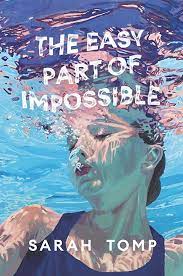
For instance, Sarah Tomp’s The Easy Part of Impossible focuses on Ria, a gifted teenaged diver. She has ADHD and often feels like competitive diving is the only place she truly shines. When she loses her diving career, she has difficulty adjusting, but her new friend Cotton is appalled when he learns about how cruel and strict her coach was. When her coach returns and she has a chance to dive again, will she?
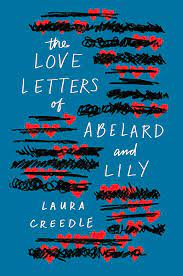
Laura Creedle’s The Love Letters of Abelard and Lily is a YA romance about two teens who meet in detention. Lily has ADHD and Abelard has Asperger’s. They share a mutual affection for ancient love letters, which quickly morphs into a very strong love for each other, but is that enough?
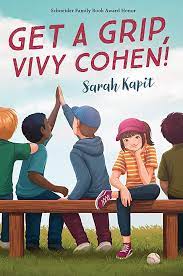
Contemporary kids’ books also often tend to have a rich depiction of neurodiverse protagonists. In Sarah Kapit’s Get a Grip, Vivy Cohen! eleven-year-old Vivy loves pitching. Her mother worries about her being on the baseball team since she’s the only girl and the only player with autism. But she makes the team, and even her hero, a Major League pitcher, becomes her pen pal. Everything’s looking up . . . until an injury gets Vivy benched.
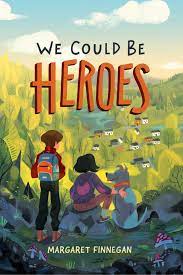
In Margaret Finnegan’s We Could Be Heroes, Hank and Maisie become fast friends, in that way that only nine-year-olds do, but Hank quickly realizes she has an ulterior motive of sorts. She wants someone to help her rescue a dog that’s kept tied to a tree because he has seizures. Hank has autism, so he knows what it’s like to be treated differently, and he wants to help the dog too. So, Hank is quickly all in on the plan. But does Maisie have other secrets of her own? And can the dog be rescued?
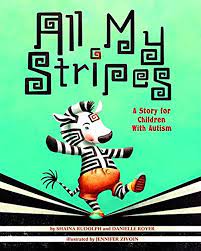
Shaina Rudolph’s and Danielle Royer’s All My Stripes: A Story for Children with Autism is advertised as a story for kids with autism, but it’s just as beneficial as an introduction to autism for children who are neurotypical. In it, Zane the zebra feels picked on at school because all the others only see his “autism” stripe, but his mother reassures him that he has other stripes too–including honesty and caring–and that all his stripes make him Zane.
Though neurodiversity often focuses on autism and ADHD, learning disabilities also fall under this umbrella. Hudson Talbott’s vivid picture book A Walk in the Words chronicles his own childhood struggle with dyslexia and how reading was initially very difficult for him.

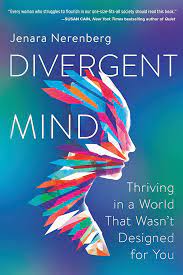
For nonfiction on the subject, we also have Jenara Nerenberg’s Divergent Mind: Thriving in a World That Wasn’t Designed for You. It focuses specifically on the experiences of women with autism, ADHD, and/or sensory processing differences. She looks at how these often present differently in women than men–which often leads to misdiagnosis–and practical suggestions for better communication and support.
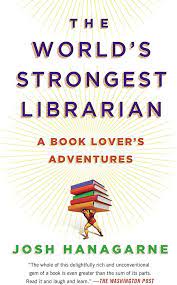
Joshua Hanagarne’s The World’s Strongest Librarian: A Memoir of Tourette’s, Faith, Strength, and the Power of Family is a touching exploration of how the author found solace in books and weight lifting to overcome debilitating nervous tics from Tourette’s Syndrome and ultimately became a librarian at the Salt Lake City Public Library.
If you prefer to watch a movie, the biopic Temple Grandin chronicles the remarkable story of Temple Grandin. Today, Grandin is one of the leading academics in how to implement humane animal treatment in farming, but as a young woman in the 60s, she faces barriers breaking into science both because she’s a woman and because she has autism.

What’s your favorite book with a neurodiverse protagonist? What have you read lately that helped you walk in someone else’s shoes? Tell us in the comments! As always, please follow this link to our online library catalog for more information on any of these items or to place them on hold.


